Post-Liposuction Lymphatic Drainage in Gurgaon: Why Surgeons Recommend It
Table of Contents
Your liposuction is done. The procedure went well, the swelling looks manageable, and you are home resting in your apartment in Tata Primanti near Golf Course Extension Road. But a week later, the puffiness has not gone down the way you expected, the contours you expected seem distant and your recovery feels slower than the timeline you were given. What most patients do not realise until after surgery is that the result you achieve depends almost as much on how you recover as it does on what happened in the operating room.
Planning your post-liposuction recovery in Gurgaon? Speak with our team at Aesthetics Redefined by Cocoona on Golf Course Road. Reach Us on +91 9560801896 or connect on WhatsApp to schedule your regenerative skin consultation today.
Meera Kapoor is 41, a senior finance manager at a multinational firm in DLF Cyber City. She had liposuction on her abdomen and flanks after years of stubborn adipose deposits that neither consistent gym sessions near M3M Golf Estate nor dietary changes had resolved. Her surgeon gave her a list of post-operative instructions, but the recommendation that confused her most was this: get manual lymphatic drainage sessions within the first two weeks. She had no idea what that meant or why it mattered.
What Happens to Your Body After Liposuction
Liposuction, whether, VASER, or laser-assisted, disrupts the lymphatic vessels in the treatment zone. The lymphatic system is a network of thin capillaries and nodes responsible for clearing interstitial fluid, immune cells, and metabolic waste from your tissues. When surgical trauma interrupts this network, lymphatic fluid accumulates in the treated area, causing the firm, doughy swelling called oedema. In some cases, prolonged fluid accumulation leads to seroma formation, which is the pooling of serous fluid beneath the skin that may require aspiration by your surgeon.
Beyond swelling, disrupted lymphatic flow slows the removal of inflammatory cytokines from the surgical site. This prolongs the inflammatory phase of healing and can increase the risk of fibrosis, which is the irregular hardening of connective tissue that results in an uneven, lumpy surface rather than the smooth contour you were aiming for.
What Lymphatic Drainage Actually Does
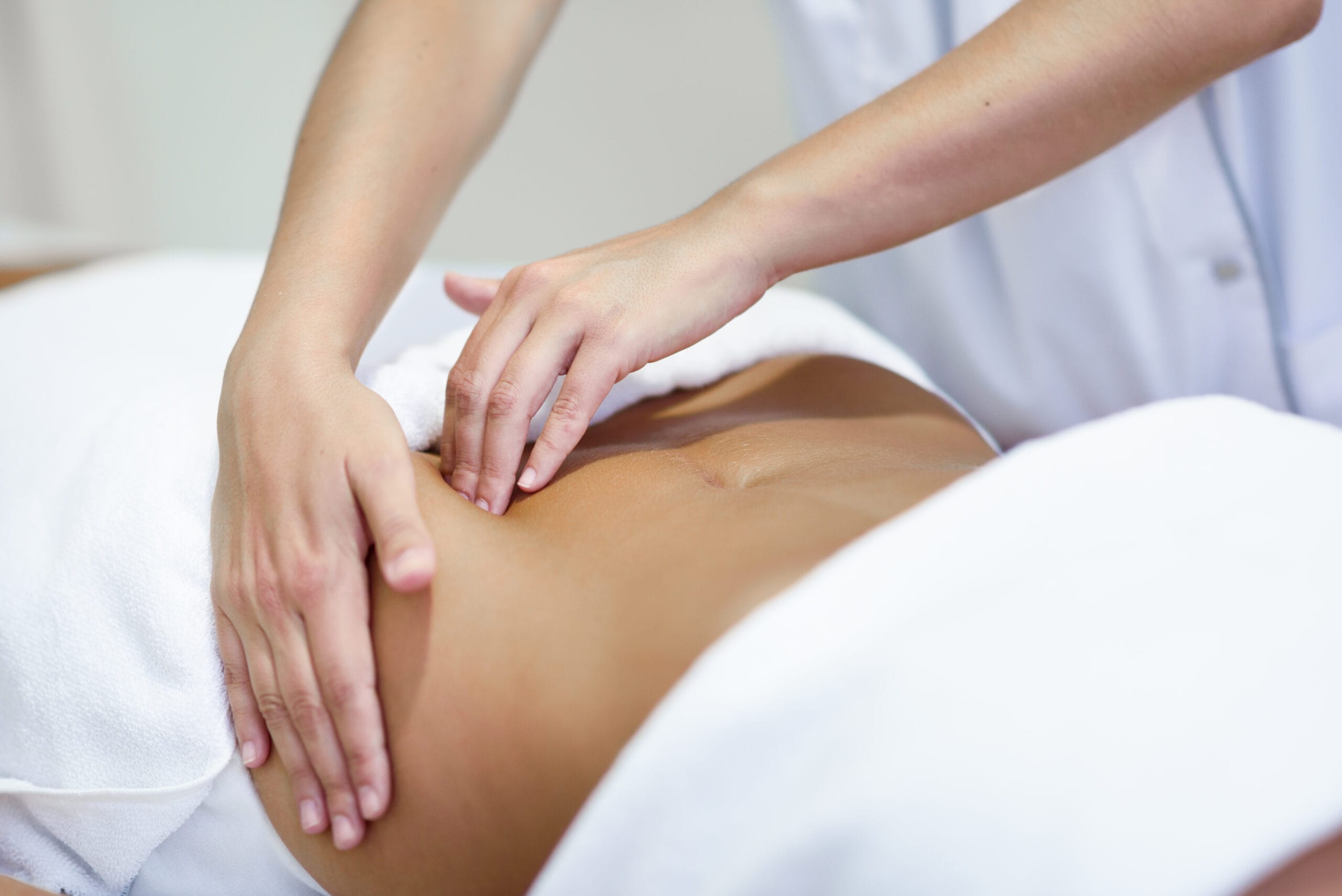
Rather than manual pressure strokes, the clinic uses radiofrequency-assisted lymphatic drainage, where controlled RF energy is delivered through a handheld device directly over the post-surgical zone. The thermal effect gently stimulates lymphatic vessel contraction, encouraging accumulated fluid to move toward the axillary (underarm) or inguinal (groin) nodes where it can be properly filtered and reabsorbed. Because the energy penetrates into the subdermal layer, it reaches fluid that surface-level techniques often miss.
Sessions are structured around your specific surgical sites and recovery stage. Early sessions prioritise acute oedema reduction. Later sessions use RF energy to address early
| Factor | RF-Assisted Drainage | Standard Manual Drainage |
| Depth of action | Subdermal, reaches deeper fluid | Surface and mid-dermal |
| Fibrosis prevention | Directly softens early hardening | Limited effect on deeper fibrosis |
| Session duration | 30 to 45 minutes | 45 to 60 minutes |
| Comfort level | Warm, non-painful thermal sensation | Light pressure, minimal sensation |
| Suitable for | Moderate to complex post-lipo cases | Early mild swelling cases |
Benefits of Lymphatic Drainage After Lipo: Quick Reference
| Benefit | What It Addresses | When It Matters Most |
|---|---|---|
| Reduces swelling faster | Oedema and lymph stasis post-surgery | Days 3 to 14 post-op |
| Prevents seroma formation | Fluid pooling under skin | First 2 to 3 weeks |
| Minimises fibrosis risk | Hard, uneven tissue texture | Weeks 2 to 6 |
| Speeds inflammatory clearance | Cytokine buildup slowing healing | Throughout recovery |
| Improves final contour | Skin smoothness and even results | Weeks 3 onwards |
| Reduces post-surgical discomfort | Tightness and heaviness in treated areas | Throughout course |
How Many Sessions Do You Need and When to Start
Most plastic surgeons and post-surgical care specialists recommend beginning lymphatic drainage sessions between day 3 and day 7 after liposuction, once initial wound healing has stabilised. Starting too early carries infection risk; waiting too long allows fibrosis to establish.
- Mild cases (small area, limited swelling): 4 to 6 sessions spaced every 3 to 4 days
- Moderate cases (multiple zones, persistent oedema): 8 to 10 sessions over 4 to 6 weeks
- Complex cases or delayed recovery: tailored protocol assessed session by session
Patients from Golf Course Road, Emaar Marbella, and Paras Quartier near Gwal Pahari who begin drainage within the recommended window consistently report smoother contours and significantly reduced discomfort at the 4-week mark compared to those who skip the protocol.
Who Oversees Your Post-Surgical Care at Aesthetics Redefined
Post-liposuction recovery is a clinical process, not a spa service. Dr. Sanjay Parshar and his team bring deep surgical expertise to post-operative planning at Aesthetics Redefined, with a structured recovery protocol that integrates lymphatic drainage into the broader healing timeline. Dr. Kriti Lohia, India’s leading American Board Certified Regenerative Medicine Expert in Dermatology, oversees the skin and tissue regeneration aspects of recovery, particularly where early fibrosis or surface irregularity needs to be addressed.
Ready to give your liposuction results the best possible recovery? Visit Aesthetics Redefined by Cocoona on Golf Course Road. Connect on +91 9560801896 or connect on WhatsApp to schedule your regenerative skin consultation today.
The surgery reshapes your body. Recovery defines the result. With the right lymphatic drainage protocol and expert oversight, what you see at six weeks reflects exactly the outcome you came in for.
People Also Ask
Is lymphatic drainage painful after liposuction?
Lymphatic drainage performed by a trained clinician should not be painful. The technique uses very light pressure, well below the threshold that stimulates pain receptors. Some patients describe a mild aching sensation in heavily swollen areas during the first session, which typically reduces significantly after the fluid starts moving. If you experience sharp or intense pain during a session, the technique being used needs to be reassessed.
Can I do lymphatic drainage at home after liposuction in Gurgaon?
Self-drainage using basic massage strokes is sometimes taught as a supplement to clinical sessions, but it does not replace professional manual lymphatic drainage. The precision required to correctly redirect lymph flow along anatomical drainage pathways toward functioning nodes is learned through clinical training. Incorrect technique can push fluid in the wrong direction or apply too much pressure on fragile post-surgical tissue. For best results, combine clinician-led sessions with simple self-care guidance your post-surgical team provides.
Who is a good candidate for RF-assisted lymphatic drainage after liposuction, and who should avoid it?
You are a good candidate if you have had liposuction on larger surface areas such as the abdomen, flanks, thighs, or back, and are experiencing persistent puffiness or early firmness in the treated zone beyond the first week of recovery. It works particularly well for patients with denser subcutaneous tissue, where fluid tends to accumulate deeper and standard approaches do not clear it efficiently.
You should avoid RF-assisted drainage if you have active infection or open wounds near the surgical site, a history of deep vein thrombosis, a cardiac pacemaker or any implanted electronic device, or if you are currently pregnant. Patients with known sensitivity to heat or a compromised lymphatic system due to prior lymph node removal should inform the doctor before any session so the protocol can be adjusted or an alternative recommended.


