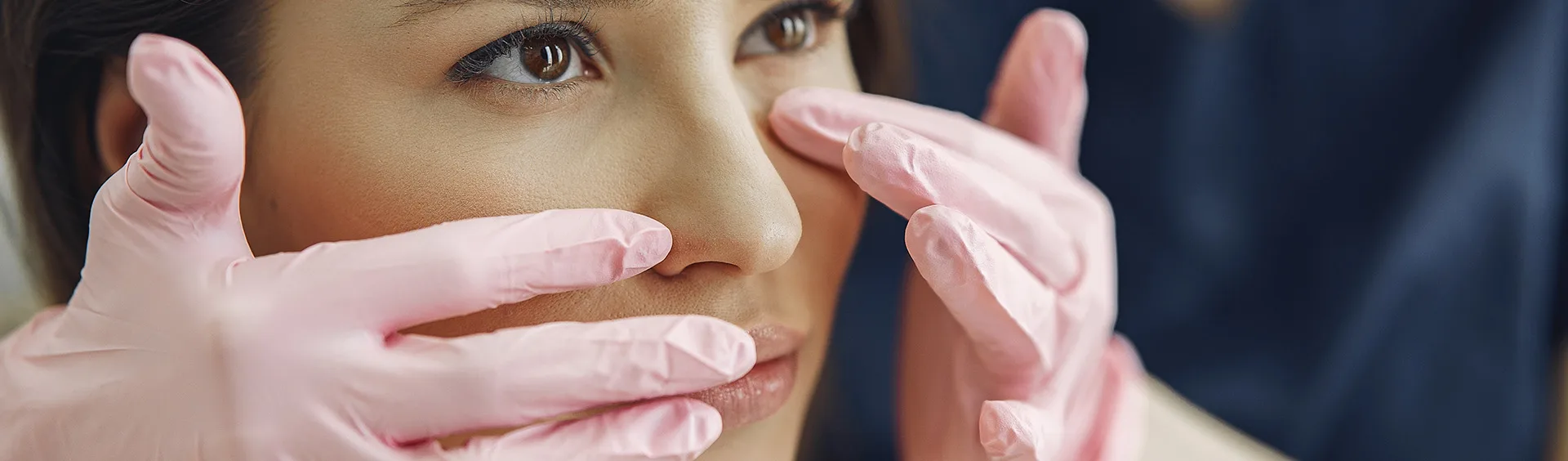
At Aesthetics Redefined by Cocoona, we help you reshape or reconstruct your nose to achieve both aesthetic and functional goals. Whether you want to correct a hump, refine a wide tip, or improve breathing, Rhinoplasty is designed for you.
Many of our patients come to us with concerns like:
| Lowest Industry Price(INR) | Highest Industry Price(INR) | ARD Average Price Range(INR) | Unit |
|---|---|---|---|
| ₹60000 | ₹400000 | Custom Consultation | Per Procedure |
Rhinoplasty is ideal for you if you:
We carefully assess your nasal structure to ensure the results are safe, natural, and tailored to you.
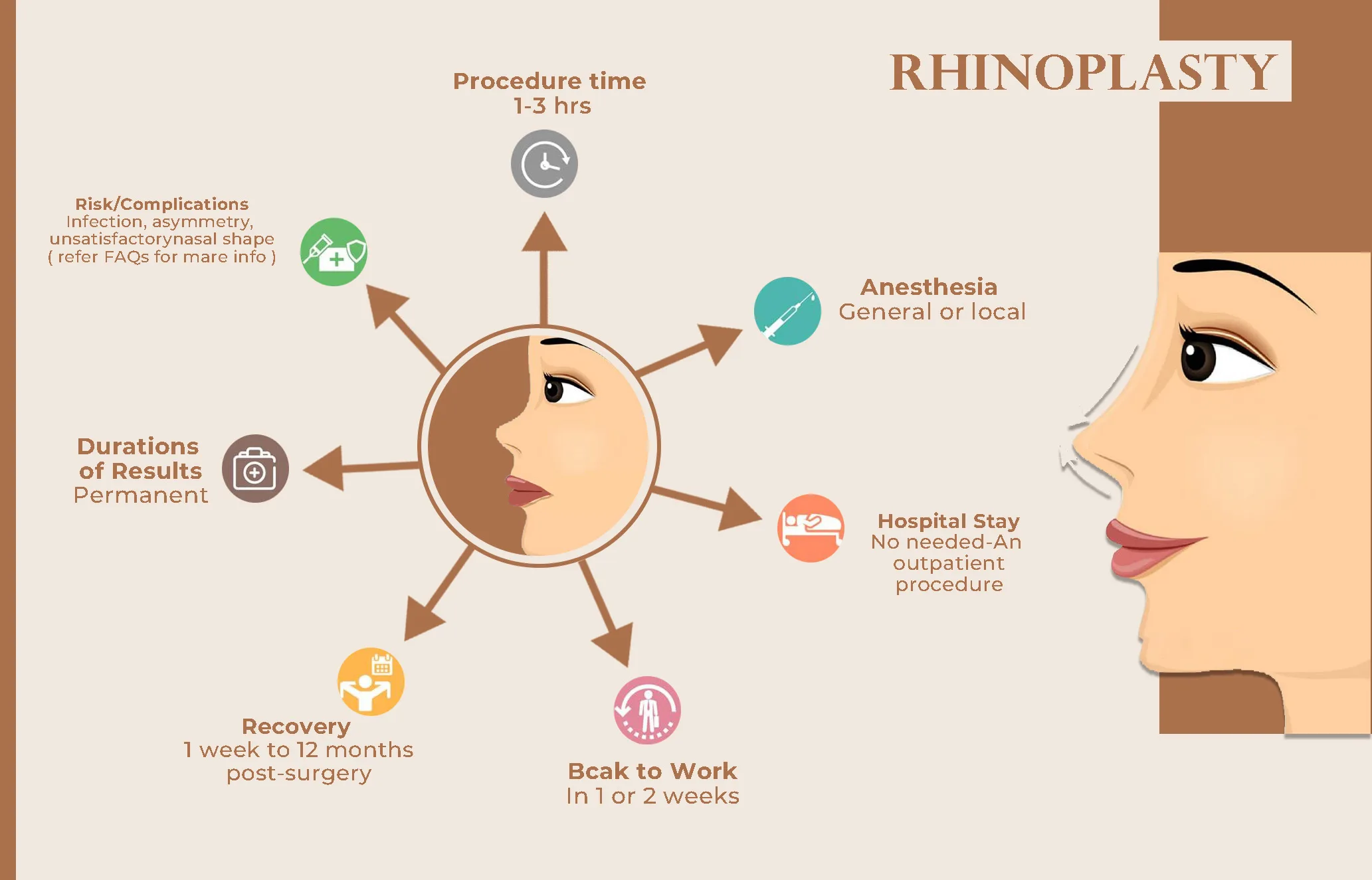
Types of Rhinoplasty:
Revision Rhinoplasty: Corrects or enhances results from a previous procedure
Like any surgery, Rhinoplasty carries certain risks, including:
Choosing an experienced and qualified surgeon helps minimize these risks and ensures safer outcomes.
Dr. Sanjay Parashar is a celebrity consultant plastic surgeon with more than thirty years in aesthetic and reconstructive surgery and a record of over 40,000 surgical procedures. He has practised and trained across India, Bahrain, the United States, Australia and the UAE, and founded Cocoona Centre for Aesthetic Transformation in Dubai. At Aesthetics Redefined by Cocoona in Gurugram, he leads the plastic surgery practice.
Dr. Sanjay Parashar
Consultant Plastic Surgeon · Co-founder & Plastic Surgery Lead
Dr. Kriti Lohia is a consultant aesthetic dermatologist and dermatosurgeon with more than a decade in practice and over 15,000 aesthetic dermatological procedures performed. She is India's first American Board-Certified Regenerative Medicine Expert in Dermatology, and the first doctor in North India to bring regenerative medicine into routine dermatological and hair practice.
Dr. Kriti Lohia
CEO & Medical Director · Consultant Aesthetic Dermatologist & Dermatosurgeon
With over 25 years of overall medical experience, Dr. Ashutosh Mishra combines global surgical precision with an artistic vision to deliver natural-looking aesthetic outcomes and comprehensive reconstructive transformations.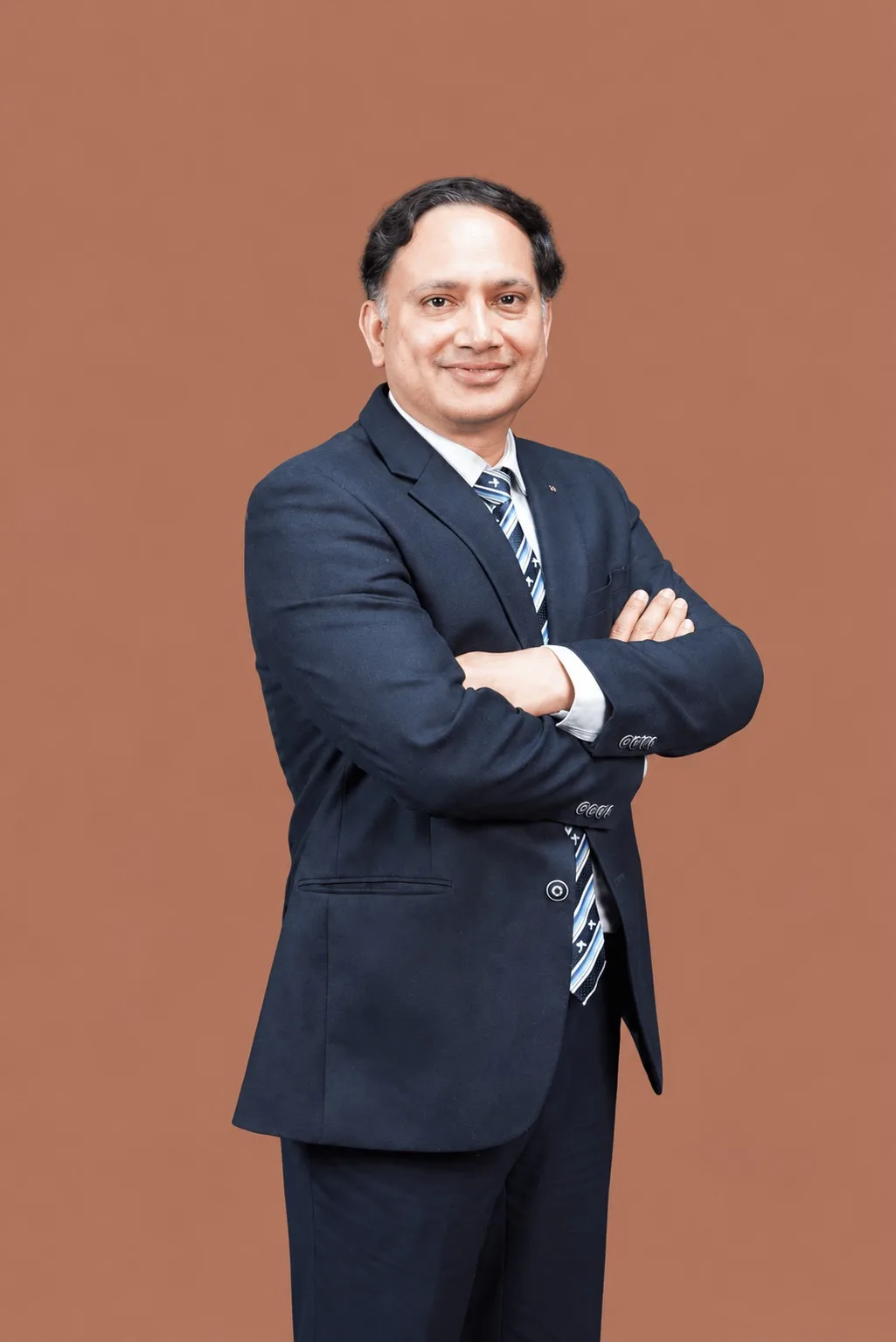
Dr. Ashutosh Mishra
Senior Consultant Plastic, Reconstructive & Cosmetic Surgeon
An AIIMS-trained specialist combining rigorous surgical expertise with an international fellowship foundation to deliver safe, natural-looking, and function-restoring aesthetic outcomes.
Dr. Sharmistha Bhattacharyya
Senior Consultant Plastic, Reconstructive & Aesthetic Surgeon
Achieving a balanced, harmonious profile requires the refined artistry of a board-certified plastic surgeon who specializes in ethnic nasal anatomy. NRIs from the US, UK, Canada, Australia, and the GCC region consistently trust Aesthetics Redefined for Rhinoplasty (Nose Job) to bypass high Western healthcare costs and long waiting lists without compromising on quality. Our surgical team combines advanced US-FDA approved technologies with meticulous craftsmanship to structuralize and refine the nose while preserving your natural identity. Our comprehensive care pathways feature seamless remote assessments and dedicated post-operative monitoring, allowing international patients to heal securely and board their long-haul return flights with complete confidence.
Didn’t see the answer to your question? No worries, just write to us! We’re always here to help you breeze through your doubts. Consult Our team of expert skin specialists, certified dermatologists and suregons at our clinic in Gurgaon.
For purely cosmetic rhinoplasty we operate from 18. Facial growth is generally complete a little earlier, around 16 to 17 in girls and 17 to 18 in boys, but we take the view that a permanent change to the centre of the face should be an adult decision made without pressure. The exception is a functional problem, a badly deviated septum or a nose broken in an accident, which we will assess earlier with parents involved throughout. Above 18 there is no upper limit that matters beyond general health.
Check the surgeon’s board certification, how much of their practice is specifically focused on nose surgery, and whether their before-and-after cases resemble the kind of change you’re hoping for. A good surgeon will physically examine your nose, explain what’s realistically achievable given your skin and cartilage, and won’t promise a fixed outcome before that assessment.
Closed rhinoplasty is done entirely through the nostrils. Open rhinoplasty adds a 4 to 5 mm incision across the columella, the strip of skin between the nostrils, which lets the surgeon see and rebuild the framework directly. That scar sits in a natural shadow and in practice becomes very difficult to see within a few months. Most noses needing structural grafting or significant tip work, which is the majority of cases here, are better served by the open approach; simple hump reduction can often be done closed.
You are likely a candidate if you are unhappy with the shape, size or symmetry of your nose, or if you have a blocked airway from a deviated septum. We look for completed facial growth, good general health, no smoking for four weeks either side of surgery, and realistic expectations. The most important thing we assess in person is your skin thickness and cartilage strength, because those, more than anything you bring in as a reference photograph, determine what your nose can actually be made to do.
Yes. Rhinoplasty can be combined with a septoplasty to straighten a deviated septum and clear any internal obstruction, improving airflow along with the way your nose looks. Many patients come in with both a cosmetic concern and a functional breathing issue, and addressing both together in one surgery is a common and effective approach.
Yes, and it is the commonest request. The bridge can be lowered by removing the excess bone and cartilage and rebuilding the roof, or by preservation techniques that reshape the bridge without dismantling it. The judgement that matters is how much to take: over-reduction leaves a scooped, obviously operated profile that is far harder to correct than a hump. On many Indian noses the right answer is a modest reduction combined with tip work rather than a large one.
Yes, but how it is done depends on your skin. Thin skin shows whatever the surgeon builds, so refinement comes from reshaping cartilage. Thicker skin, which is common in Indian noses, drapes over the framework and hides definition, so the answer is to build a stronger, better-projected structure underneath rather than to remove cartilage, which can weaken the tip and make it droop later. Thick skin also takes considerably longer to shrink down, so the refined tip appears gradually over many months rather than at six weeks.
Revision rhinoplasty corrects or improves a previous nose operation, whether it was done here or elsewhere. It is considered when the shape has healed asymmetrically, when too much or too little was done, or when breathing has been affected. Two things worth knowing. Revision is not usually considered before twelve months, because the nose is still settling and what looks wrong at four months often is not. And revision is a harder operation than a primary: scar tissue is unpredictable and there is often no septal cartilage left, so grafts have to come from the ear or rib.
The specific ones. Around 5 to 15 percent of rhinoplasty patients worldwide have a second operation, most often for a minor contour issue rather than anything dramatic; that number is inherent to the operation and any surgeon who implies otherwise is not being straight with you. Reducing a nose can narrow the airway if the internal valve is not supported, so breathing is planned even in a purely cosmetic case. Less common: bleeding, infection, a hole in the septum, and altered sensation at the tip. Thick skin means prolonged swelling rather than a complication. Smoking materially raises the risk of healing problems
The splint comes off at about seven days. Sleep propped up for the first two weeks and do not blow your nose for two weeks; use saline spray instead. Glasses must stay off the bridge for four to six weeks, tape them to your forehead or wear contacts, because the nasal bones are still setting. No contact sport for six weeks and nothing that risks a knock. Use sun protection daily for six months, since new nasal skin marks easily. If you have thick skin we may keep you taping at night for four to six weeks longer to help the swelling settle.
The structural change is lasting, since bone and cartilage have been reshaped rather than filled. Two honest qualifications. The nose keeps ageing like the rest of your face, and the tip gradually descends over decades. And cartilage has some memory, so a small amount of movement in the first year is normal and is one of the ordinary reasons a minor adjustment is sometimes made. The final shape is not visible for around twelve months, longer if your skin is thick.
Rhinoplasty is designed to improve facial harmony, not to change your identity, so the aim is a nose that fits naturally with your other features rather than one that looks obviously operated on. Because the nose sits at the centre of the face, even a moderate change can noticeably improve overall balance, which is why a careful, individualised surgical plan matters so much.
Most patients say the first few days feel more like pressure and stuffiness than sharp pain, especially once the splint is on and swelling sets in, and this is well-managed with prescribed medication. Discomfort eases noticeably after the first week, and most of the visible bruising and swelling settles within 2–3 weeks, though subtle refinement continues for months.
For a hump, a deviated nose or a blocked airway, surgery makes a permanent change that nothing else will. What you are accepting in return is a week in a splint, two to three weeks before you look normal in public, up to a year before the shape is final, and a real chance, roughly one in ten, of wanting a small adjustment afterwards. Patients who came for a specific, identifiable concern are generally very glad they did it. Patients who could not name what they disliked usually are not, and we would rather talk that through than book you.
Cost depends on whether the surgery is purely cosmetic, functional, or a combination, along with the complexity of reshaping needed and whether it’s a first-time or revision procedure. At our Gurgaon clinic, we share a personalised quote after your consultation, once your surgeon has assessed your nasal structure and surgical plan.
Most patients sleep with their head elevated on extra pillows for the first 1–2 weeks, which helps reduce swelling and keeps pressure off the nose while it heals. Sleeping on your back rather than your side or stomach is important during this period, and your surgical team will tell you how long to keep this up.
Purely cosmetic rhinoplasty is excluded from standard health insurance in India. Where there is a genuine functional problem, most often a deviated septum obstructing the airway, the septoplasty component may be claimable, with the cosmetic portion still payable by you. The critical point is timing: this needs pre-authorisation and documented clinical findings before surgery, not a claim submitted afterwards. We will prepare the paperwork, but approval is your insurer’s decision and we cannot guarantee it.
Yes, and male rhinoplasty is a significant part of this practice. The goal differs: a straight or very slightly high dorsum rather than a scooped one, a tip that is not over-rotated, and a nose that stays in proportion to a heavier brow and jaw. Over-reduction is the classic error in male rhinoplasty and is difficult to undo. Men also tend to have thicker skin, which means slower resolution of swelling.
Most of the visible swelling and bruising fades within 2–3 weeks, so you’ll generally look presentable in public by then, but a fine layer of residual swelling can linger at the tip for several months. It typically takes close to a year, sometimes longer, for the nose to fully settle into its final shape.
Look for a clinic led by board-certified plastic surgeons with dedicated surgical facilities, a clear track record of natural-looking before-and-after results, and consultations that are tailored to your face rather than a one-size-fits-all approach. At Aesthetics Redefined by Cocoona in Gurgaon, rhinoplasty is performed by an experienced, board-certified plastic surgeon with a strong focus on facial harmony and safety.
Worth asking: Open or closed for my nose, and why? Will you need cartilage grafts, and where will they come from, septum, ear or rib? Do you use implants, and if so why? Will this improve or affect my breathing? Given my skin thickness, how much tip definition is realistic and how long will it take to show? What are my specific risks? What is your revision rate, and what happens if I need one? And what does the quote include? Bring the list.
Aesthetics Redefined by Cocoona is now the only Cocoona clinic in Gurugram and Delhi NCR, serving patients across Delhi NCR with dermatologist-led regenerative skin, hair, wellness and plastic surgery treatments on Golf Course Road. The clinic brings together Dr. Kriti Lohia, India's leading American Board Certified Regenerative Medicine Expert in Dermatology, and Dr. Sanjay Parshar, a renowned name in plastic and cosmetic surger , offering patients access to combined dermatological and surgical expertise trusted not only across Gurgaon, Delhi NCR but also across India and overseas.
Contact: Aesthetics Redefined, 3rd Floor, 26/12D, Flat No: A, Golf Course Rd, Sector 28, DLF Phase 1, Gurugram, Haryana
122002.
Landmark: Near Mega Mall.
Disclaimer: The content and videos/ images displayed are for educational and awareness purposes only and not a medical recommendation. The site contains AI generated images also and such images are maked with "AI generated". All patients images/ videos used are actual images/ videos and with specific consent of the patient. Medical Disclaimer