Understanding Different Types of Acne Scars — Ice-Pick, Rolling, Boxcar & Best Removal Treatment for Each
That promotion to team lead finally came through, but now you’re facing clients and leading presentations in boardrooms across Golf Course Road. Suddenly, those acne scars you’ve ignored for years feel impossible to hide under conference room lights. A 28-year-old marketing manager from Sector 56 recently shared how she’d been avoiding video calls, always angling her camera just right to mask the texture on her cheeks.
Here’s what changes everything: different scar types need different solutions. Using the wrong treatment wastes time and money while leaving scars untouched. This guide explains ice-pick, rolling, and boxcar scars so you can finally pick treatments that actually deliver results.
Struggling with stubborn acne scars that makeup can’t hide? Visit Aesthetics Redefined by Cocoona on Golf Course Road for expert scar analysis. Get a customized treatment plan targeting your specific scar pattern.
What Are Acne Scars?
Acne scars develop when inflamed breakouts damage deeper skin layers. Your body rushes to repair this damage using collagen, but the healing process sometimes misfires. Insufficient collagen creates depressions, while overproduction forms raised marks.
Unlike pigmentation that gradually fades, actual acne scars involve permanent structural changes. They won’t vanish without targeted intervention. Identifying which scar type you have simplifies choosing effective treatment considerably.
Types of Acne Scars Explained
Ice-Pick Scars (Deep & Narrow)
Think of narrow, deep holes punched into skin—that’s exactly how ice-pick scars look. These thin channels extend deep into the dermis, making them the trickiest type to treat successfully. Severe cystic acne typically leaves these behind, particularly across cheeks and temple areas. Patients living in Nirvana Country and Palam Vihar notice them becoming more prominent as collagen naturally depletes with age.
Rolling Scars (Wavy Depressions)
These create rippled, uneven texture across larger skin areas. Rolling scars form when fibrous tissue bands underneath pull the surface downward, creating broad depressions with gentle, sloping edges. The shadow effect becomes especially noticeable in natural daylight—something many professionals working in the glass towers of DLF Cyber City understand well.
Boxcar Scars (Sharp-Edged Depressions)
Picture rectangular indentations with sharply defined edges and flat bases. Boxcar scars create angular depressions rather than rounded ones, resembling small craters pressed into skin. Depth varies significantly—shallow versions respond faster than deeper ones. They cluster commonly on cheeks and temples, becoming glaringly obvious under bright retail lighting around Ambience Mall.
Best Treatment Options for Each Acne Scar Type
Best Treatment for Ice-Pick Scars (TCA Cross, Subcision, Punch Excision)
Ice-pick scars demand intensive approaches because of how deeply they penetrate. TCA Cross applies concentrated chemical solution directly inside each narrow scar, sparking collagen production from the bottom upward. Visible improvement emerges after three to four monthly sessions. Punch Excision surgically removes the entire scar through precise micro-surgery, then closes the tiny wound with sutures. Subcision involves releasing the fibrous anchor holding scars down, letting the depression naturally lift.
Best Treatment for Rolling Scars (Subcision, RF Microneedling)
Rolling scars benefit significantly from collagen-stimulating approaches. Subcision remains the gold standard treatment, where Dr. Kriti Lohia, India’s only American Board Certified Regenerative Medicine Expert in Dermatology, uses specialized needles to release the fibrous bands anchoring scars downward, allowing natural elevation. Severe rolling scars often require comprehensive protocols combining Taylor’s liberator subcision with regenerative therapies like advanced PRP with exosomes and strategic Biofiller placement to restore lost volume. Radiofrequency Microneedling complements these interventions by delivering controlled thermal energy that remodels collagen architecture from within. This multi-modal approach addresses both the structural tethering and volumetric deficits characteristic of rolling scars.
Best Treatment for Boxcar Scars (Laser Resurfacing, MNRF)
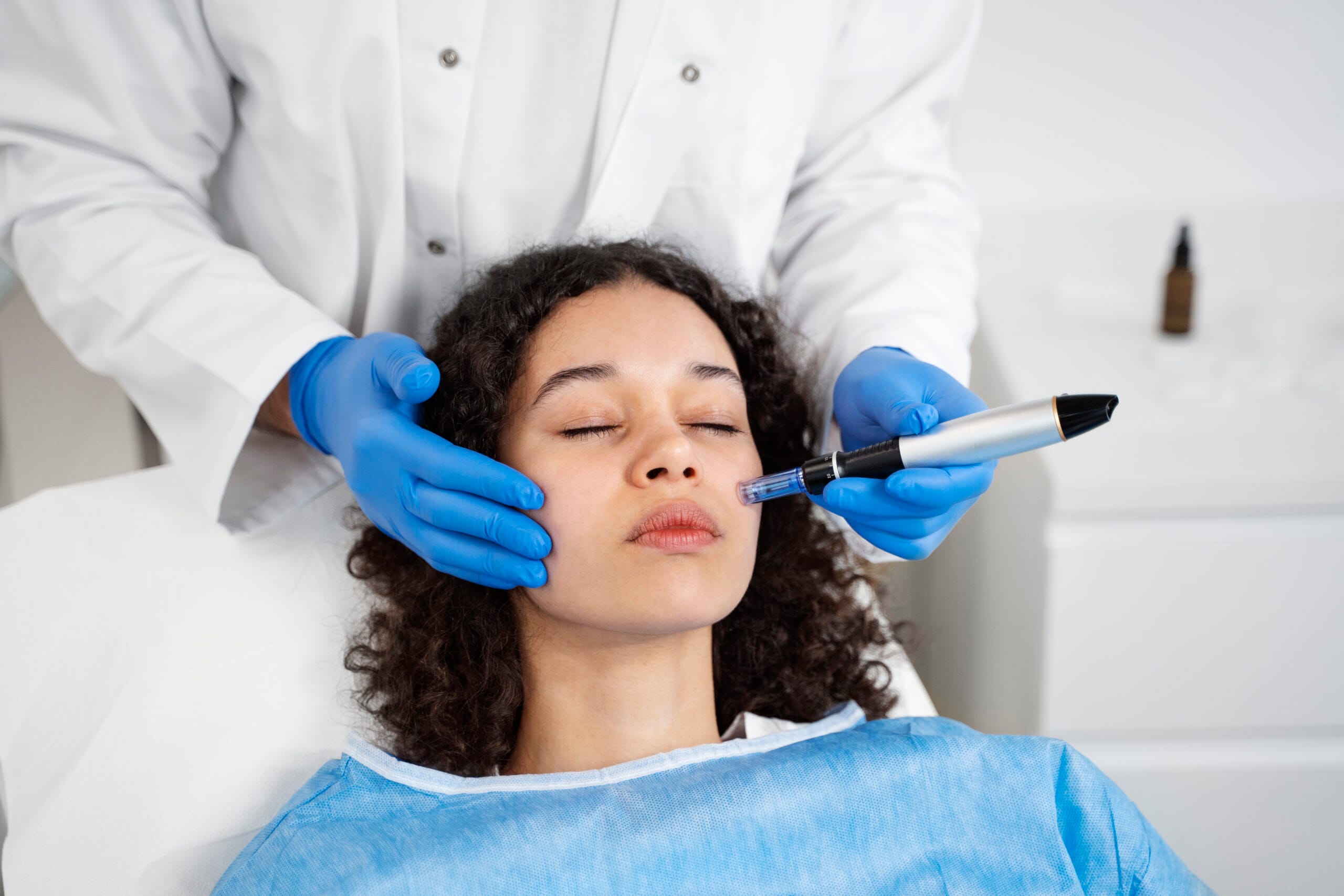
Boxcar scars present unique treatment challenges depending on their depth classification. Laser Resurfacing works effectively for shallow to moderate boxcar scars by removing damaged surface layers and stimulating collagen production in deeper tissue through controlled heating. CO2 lasers deliver particularly impressive results for this scar variety. MNRF (Microneedling Radiofrequency) provides precise energy delivery at specific scar depths, creating controlled thermal restructuring from within the skin. However, deeper boxcar scars with sharply defined borders typically require punch excision as the primary intervention, where the depressed scar tissue gets surgically removed before laser resurfacing optimizes the remaining skin texture. Microneedling alone offers benefits for less severe boxcar scars by triggering natural healing cascades through micro-trauma.
Combination Treatments for Better Results
Real-world scar challenges rarely involve a single type. Most patients consulting clinics near Sushant Lok or New Gurgaon arrive with mixed scar patterns demanding customized multi-treatment strategies. Your specialist might recommend subcision initially to free tethered tissue, followed by microneedling or MNRF rounds to rebuild collagen architecture, finishing with TCA Cross for persistent deep pits. Combining approaches also accelerates overall timelines.
How Many Sessions Are Needed?
Setting accurate treatment timelines helps manage expectations effectively. Ice-pick scars follow a specialized treatment sequence where practitioners first convert these narrow, deep scars into broader rolling scars through targeted techniques, then address them using rolling scar treatment protocols. This conversion-then-treatment approach requires four to six sessions at minimum. Rolling scars demand three to five subcision appointments paired with four to six microneedling treatments for optimal outcomes. Boxcar scars necessitate three to six laser or MNRF sessions depending on how deeply they’re depressed, with pronounced cases needing punch excision procedures before laser resurfacing can effectively improve skin texture. Treatment appointments typically space four to six weeks apart, allowing adequate healing between interventions. Visible improvements generally emerge around session two or three, with maximum results developing months after completing your full treatment course.
When to See a Skin Specialist in Gurugram (Gurgaon)
Book a consultation when scars impact your self-confidence or when over-the-counter products haven’t produced improvement after several months. The longer scars exist untreated, the more firmly established they become within your skin structure. At Aesthetics Redefined, thorough evaluation examines your particular scar varieties, current skin health, and lifestyle considerations before designing personalized treatment protocols.
Ready to transform textured skin and diminish persistent acne scars? Visit Aesthetics Redefined by Cocoona on Golf Course Road for comprehensive scar evaluation. Whether ice-pick, rolling, or boxcar scars concern you, the right treatment combination restores smooth, confident skin. Schedule your consultation today.
Acne scars don’t define your worth. With precision treatments matched to your unique scar patterns and guidance from experienced dermatology professionals, achieving smoother, more confident skin becomes reality.